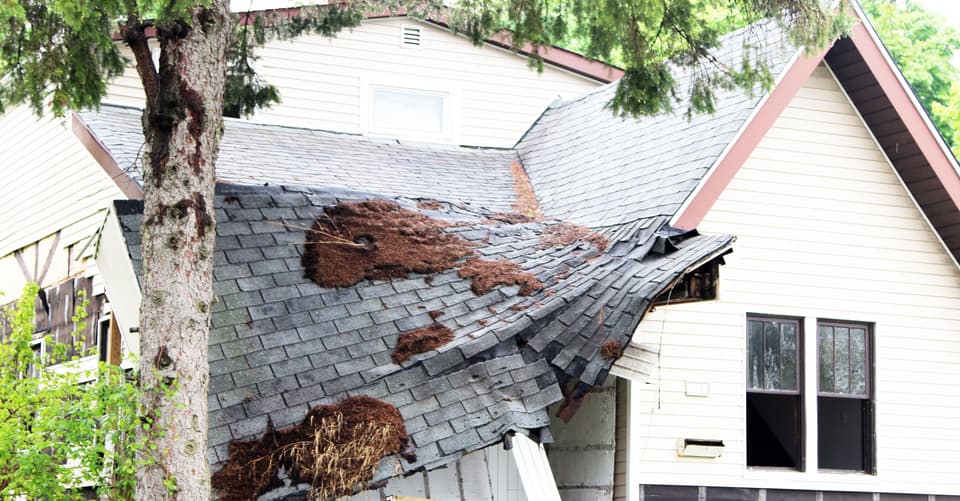
Climate change is already here, and it’s raising the stakes for homeowners and insurers alike. In states especially exposed to extreme weather, homeowners insurance keeps getting more expensive.
Insurers are reassessing that risk. Bigger losses are bound to follow, and those costs get passed on to policyholders through higher premiums or even canceled coverage.
A standard homeowners policy generally covers roof damage from wind, snow or fire, but not from floods or earthquakes. These disasters are happening more often and across wider parts of the U.S. The Insurance Information Institute reports that hail and wind damage claims rose 11% between 2015 and 2019 (the latest year with available data).
Replacing a roof is among the most expensive home repairs, typically running from $8,000 to $22,000 depending on where you live and the materials you choose.
Recent extreme weather has pushed homeowners insurance premiums higher, and an older roof can make it even harder to get a policy or renew one. Insurers are getting pickier about paying for roof repairs and better at spotting roofs that are likely to be damaged.
Insurers now send drone cameras to check a roof’s condition before they write or renew a policy. Some also use satellite images to study the impact of extreme weather, for example by comparing roof conditions before and after a hurricane.
The result is that insurers are looking more closely at roofs and reaching out to homeowners whose roofs could be a problem.
In most of the country, the odds of a policy being canceled outright just because the roof is old are low. Wherever you live, though, ignoring your home’s "lid" for years can leave you with reduced coverage, and that could cost you dearly if your roof is damaged or destroyed.
Here’s what to know about how your roof’s age and condition affect you and your insurance.
Climate Change Is Shortening Roof Life
The typical roof doesn’t last as long as it once did, and insurance experts see the changing climate as a major reason.
Asphalt shingle roofs, the most popular choice in the United States, have traditionally been expected to last 20 to 25 years. These days roofs can “age” and start breaking down more quickly. On top of more frequent and more severe storms, everyday exposure to extreme weather can shorten a roof’s life.
Research from S&P Global Market Intelligence puts the expected life of an asphalt shingle roof in Florida at 10 to 12 years, compared with 20 years in other states.
The issue isn’t limited to Florida, or even to states known for damaging storms. Insurers have responded by recognizing a "problematic pattern" in managing risk, which includes more caution about renewing policies.
Inflation Is Driving Costs Up
Making matters worse, the cost to repair and replace roofs has shot up.
Asphalt shingles, for instance, are made from petroleum, so oil prices directly affect what they cost to produce.
Florida also has a roofing fraud problem, with dishonest contractors flocking to the state for repair and replacement work. Gaps in the law there make it easier for bad actors to inflate damage claims and use the courts to effectively force insurers to cover those padded costs.
In response, Florida has passed laws aimed at reining in the worst offenders, and insurers in the state are taking similar steps. Progressive, for example, asked Florida insurance regulators to approve a rule for two of its companies, ASI Preferred Insurance Corp. and American Strategic Insurance Corp., under which homeowners policies would be issued or renewed only if the insured home’s roof is 15 years old or newer. That age limit would replace a vaguer standard that simply required the roof to be in good condition.
What This Means for Homeowners
Policies are being canceled over old roofs outside Florida too. Because of rising costs and climate change, coverage may be reduced well before a roof hits the old standard life expectancy of 20 to 25 years.
A homeowner whose roof is middle-aged, often more than 15 years old (depending on the area and the policy), may see coverage switched from "replacement" to "actual cash value" at renewal.
With that change, the full cost of repairing or replacing the roof may no longer be covered. The payout limit is instead adjusted to reflect how much useful life the roof has left. So if a hurricane or other extreme weather forces you to replace your roof, you could end up paying thousands of dollars beyond your deductible.
That makes it worth considering a new roof before yours turns 15 or starts to show wear. Your insurer may recommend it, but it can’t make you repair a roof that’s too old or in bad shape. It can, however, choose not to renew your policy if it decides your roof is too old and you won’t fix it.